Additional information
| Wine Type | |
|---|---|
| Country | |
| Region | |
| Subregion | |
| Vintage | |
| Producer | |
| Appellation | |
| Bottle Size | |
| Pack Size | |
| Availability |
$275.00
6 for sale
Availability: Future Arrival
| Wine Type | |
|---|---|
| Country | |
| Region | |
| Subregion | |
| Vintage | |
| Producer | |
| Appellation | |
| Bottle Size | |
| Pack Size | |
| Availability |
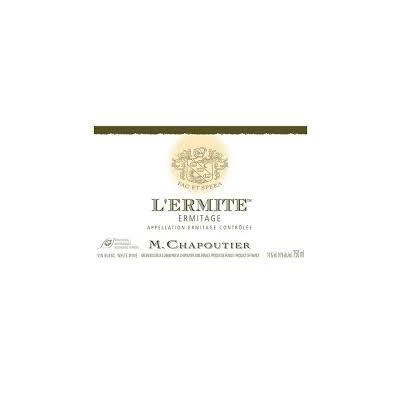
Opaque purple. Powerful, deeply pitched aromas of cassis, candied plum, licorice and violet oil, with suggestions of olive and smoky minerals adding complexity. Weighty and broad in the mouth, offering bitter cherry and floral pastille flavors and a strong note of dark chocolate. Becomes spicier and livelier with air and finishes very long and broad, with chewy tannins adding grip. This is a real baby. The vines at this site are reportedly over 100 years old now.
Anticipated maturity: 2018-2036
Another wine that topped out on my scale, the 523-case 2012 Ermitage l’Ermite is as profound an Hermitage as you can find. Coming from the granite soils located around the Chapel on the top of Hermitage hill, it’s always the most tight, backward and structured of the releases, even more so than the Pavillon, which always seems to have another layer of sweet fruit to me. The 2012 is deeper and richer than the 2011, yet as with most 2012s, it more approachable and forward than the 2010 (and 2009 in this case). Exhibiting awesome notes of powdered rock, creme de cassis, liquid violets and lite gunpowder, it hits the palate with full-bodied richness, awesome mid-palate depth and building, ultra-fine tannin that frame the finish. It’s an incredible wine that will won’t start to become approachable until a decade after the vintage, and then will keep for three decades. Michel Chapoutier has once again produced one of the reference-point lineups for the entire Rhone Valley. Certainly, his 2012s lived up to my billing last year, and they’re easily some of the finest efforts produced in the vintage, not only with his top cuvees in Hermitage and Cote Rotie, but also in the up-and-coming appellation of St Joseph, as well as in Condrieu (where his Coteaux du Chery is one of the finest in the appellation), St Peray and Crozes Hermitage. You can see my thrilled reviews on his 2012 Southern Rhones in Issue 215. His 2012 whites were all reviewed last year from bottle, but they were included again in the massive tasting at this estate this year, so I opted to include them again. They all showed as good, if not better, than last year. Tasted out of bottle this year, the Le Meal, Pavillon and l’Ermite came in at the top of their barrel reviews from last year, which puts them on par with what was accomplished in 2009 and 2010. That’s shocking to me, but the proof is in the glass, as they say. Incredibly, I find the quality in the 2013s almost as compelling, and Michel thinks there’s more than one perfect wine in that lineup. His Le Meal and Les Greffieux releases, in particular, seem to have hit another level recently. These will see an extended elevage in barrel, and I suspect a few will still be in barrel next year for my tastings as well. The 2013 whites are some of the finest I’ve ever tasted from him, and they have incredible concentration, depth and length, with beautiful acidity and freshness. Marsanne just doesn’t get any better than what’s put into his le Meal, l’Ermite and de L’Oree cuvees. A wine I think competes at that level (and I’ve had it side by side numerous times) is his Saint Joseph Les Granits Blanc. Unfortunately, it’s now being priced at roughly the same level and falls outside what I would normally classify as value. Nevertheless, it’s a world-class example of Northern Rhone white and will age for two decades or more. However, a wine that’s still a smoking value is his Chante Alouette, and readers wanting to get a small taste of what’s offe
Anticipated maturity: 2022-2052